Friday, September 16, 2011
PREVIEW - STEINHAUSEN LEONARDO TW783G SKELETON GENTS WRISTWATCH
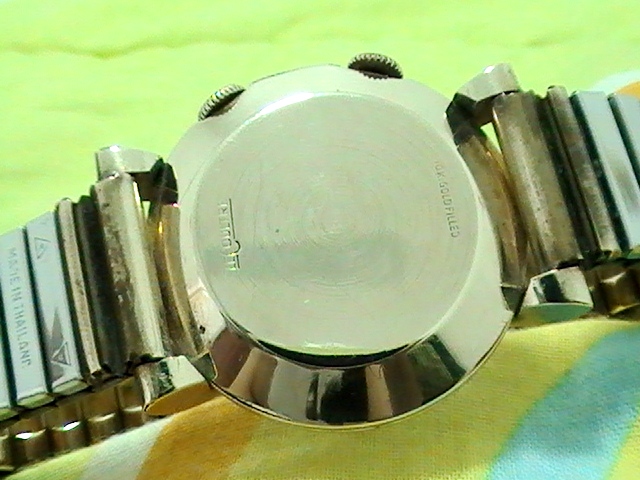
AUTHENTIC JAEGER LE COULTER WRISTALARM (EALIER MEMOVOX) GENTS WRISTWATCH
BRAND/JENAMA: AUTHENTIC VINTAGE 10K GOLD FILLED LECOULTRE WRISTALARM (EALIER MEMOVOX) GENTS WRISTWATCH
MADE IN/BUATAN: SWISS
CIRCA/TAHUN: 1960's
MODEL: POWER RESERVED
CRYSTAL/CERMIN: ACRYLIC
MOVEMENT/ENJIN: LECOULTRE 17 JEWELS MANUAL MOVEMENT CAL.411
DIAL COLOR: CHAMPAGNE
FUNCTION/FUNGSI: HOUR, MINUTE, SECOND AND ALARM DISC
HANDS/JARUM: GOLD TONE
MARKERS/TANDA WAKTU: GOLD TONE STICKS AND ARABIC MARKERS
CASING : 10K GOLD FILLED
LUGS: 16mm UNUSUAL LOGS LUGS
MEASUREMENT/UKURAN: 34mm DIAMETER INCLUDING CROWN and 37mm LUG TO LUG
BEZEL: 10K GOLD FILLED BEZEL
DITANDA/ENGARVED BACK CASING: -
CROWN: UNSIGNED ORIGINAL CROWN
STRAP/TALI: 10K GOLD FILLED SPIEDEL BAND
SIZE STRAP/SAIZ TALI: 9.5" FULL LENGHT
DISCONTINUED LECOULTRE MODEL... RARE BUMPER MODEL!
EXCELLENT CONDITION, KEEPING GOODTIME AND ALARM BUZZING LOUDLY
PRICE/HARGA: RM2,500 (NEGOTIABLE)
A BRIEF HISTORY OF LE COULTRE WATCHES
A brilliant inventor and self-taught watchmaker, Antoine-LeCoultre founded his first workshop in 1833, following the invention of a machine to produce watchmaking pinions. Ever since, the Manufacture Jaeger-Lecoultre has developed constantly around the founder's original workshops.
Surprisingly enough, it was neither a physicist nor an engineer who first measured the micron; it was Antoine LeCoultre, in 1844. He had created watch components that were so perfect no tool could actually detect their degree of inaccuracy. He followed that up by inventing the world's most accurate instrument: the Millionometer, which served as a benchmark for over half a century.
In 1847, LeCoultre created a revolutionary system that was to do away with the need for keys to rewind and set watches. His simple and brilliant solution was a pushbutton that activated a lever to switch from one function to another. It was the first keyless winding mechanism, and the first reliable system that eliminated the need for keys to wind or set a watch.
In 1866, when Swiss watchmaking was still structured around small home-run workshops, Antoine LeCoultre and his son Elie decided to bring together under one rood the many skills involved in making watches, and installed a steam-driven machine to operate their new tools. LeCoultre & Cie thus became the first Manufacture in the Vallée de Joux.
It was in 1903 when the Parisian Edmond Jaeger set Swiss watchmakers the challenge of producing ultra-thin calibres. It would lead to the Calibre 145, the world's thinnest mechanical movement, measuring no more than 1.38 mm, and the friendship of Antoine LeCoultre's grandson, Jacques-Devid LeCoultre. These two men would give a rise to a range of horological wonders, and eventually the birth of the Jaeger-LeCoultre brand in 1937.
In the year 1908, the Manufacture created its first rectangular-shaped calibre in response to the challenge created to miniaturize watches to wear on the wrist. By the "Roaring 20s" (1920s), very small ladies' wristwatches were all the rage, but extreme miniaturization always led to a loss of reliability and precision. The Duoplan brilliantly solved this problem by arranging its parts on split levels. It would lead to the world's smallest movement, Calibre 101. Outdoing the Calibre 145, Jaeger-Lecoultre miniaturized the Duoplan caliber to the extreme, weighing in at barely one gram and comprising of 74 parts. Its record is still unmatched to this date.
Since its founding, the Manufacture has created and produced over 1,000 different calibres in many varieties. Over 200 patented inventions have contributed to the progress of Swiss watchmaking in the field of movements, as well as that of cases, bracelets, dials, and watch functions.
AUTHENTIC JAEGER LE COULTER WRISTALARM (EALIER MEMOVOX) GENTS WRISTWATCH
BRAND/JENAMA: AUTHENTIC VINTAGE 10K GOLD FILLED LECOULTRE WRISTALARM (EALIER MEMOVOX) GENTS WRISTWATCH
MADE IN/BUATAN: SWISS
CIRCA/TAHUN: 1960's
MODEL: POWER RESERVED
CRYSTAL/CERMIN: ACRYLIC
MOVEMENT/ENJIN: LECOULTRE 17 JEWELS MANUAL MOVEMENT CAL.411
DIAL COLOR: CHAMPAGNE
FUNCTION/FUNGSI: HOUR, MINUTE, SECOND AND ALARM DISC
HANDS/JARUM: GOLD TONE
MARKERS/TANDA WAKTU: GOLD TONE STICKS AND ARABIC MARKERS
CASING : 10K GOLD FILLED
LUGS: 16mm UNUSUAL LOGS LUGS
MEASUREMENT/UKURAN: 34mm DIAMETER INCLUDING CROWN and 37mm LUG TO LUG
BEZEL: 10K GOLD FILLED BEZEL
DITANDA/ENGARVED BACK CASING: -
CROWN: UNSIGNED ORIGINAL CROWN
STRAP/TALI: 10K GOLD FILLED SPIEDEL BAND
SIZE STRAP/SAIZ TALI: 9.5" FULL LENGHT
DISCONTINUED LECOULTRE MODEL... RARE BUMPER MODEL!
EXCELLENT CONDITION, KEEPING GOODTIME AND ALARM BUZZING LOUDLY
PRICE/HARGA: RM2,500 (NEGOTIABLE)
A BRIEF HISTORY OF LE COULTRE WATCHES
A brilliant inventor and self-taught watchmaker, Antoine-LeCoultre founded his first workshop in 1833, following the invention of a machine to produce watchmaking pinions. Ever since, the Manufacture Jaeger-Lecoultre has developed constantly around the founder's original workshops.
Surprisingly enough, it was neither a physicist nor an engineer who first measured the micron; it was Antoine LeCoultre, in 1844. He had created watch components that were so perfect no tool could actually detect their degree of inaccuracy. He followed that up by inventing the world's most accurate instrument: the Millionometer, which served as a benchmark for over half a century.
In 1847, LeCoultre created a revolutionary system that was to do away with the need for keys to rewind and set watches. His simple and brilliant solution was a pushbutton that activated a lever to switch from one function to another. It was the first keyless winding mechanism, and the first reliable system that eliminated the need for keys to wind or set a watch.
In 1866, when Swiss watchmaking was still structured around small home-run workshops, Antoine LeCoultre and his son Elie decided to bring together under one rood the many skills involved in making watches, and installed a steam-driven machine to operate their new tools. LeCoultre & Cie thus became the first Manufacture in the Vallée de Joux.
It was in 1903 when the Parisian Edmond Jaeger set Swiss watchmakers the challenge of producing ultra-thin calibres. It would lead to the Calibre 145, the world's thinnest mechanical movement, measuring no more than 1.38 mm, and the friendship of Antoine LeCoultre's grandson, Jacques-Devid LeCoultre. These two men would give a rise to a range of horological wonders, and eventually the birth of the Jaeger-LeCoultre brand in 1937.
In the year 1908, the Manufacture created its first rectangular-shaped calibre in response to the challenge created to miniaturize watches to wear on the wrist. By the "Roaring 20s" (1920s), very small ladies' wristwatches were all the rage, but extreme miniaturization always led to a loss of reliability and precision. The Duoplan brilliantly solved this problem by arranging its parts on split levels. It would lead to the world's smallest movement, Calibre 101. Outdoing the Calibre 145, Jaeger-Lecoultre miniaturized the Duoplan caliber to the extreme, weighing in at barely one gram and comprising of 74 parts. Its record is still unmatched to this date.
Since its founding, the Manufacture has created and produced over 1,000 different calibres in many varieties. Over 200 patented inventions have contributed to the progress of Swiss watchmaking in the field of movements, as well as that of cases, bracelets, dials, and watch functions.
Wednesday, August 31, 2011
PREVIEW - EXTREMELY VERY RARE HIGHLY COLLECTIBLE OMEGA CHRONOGRAPH 2668CK CAL.321 GENTS WRISTWATCH
WILL KEEP IT AS MY PERSONAL COLLECTION BECAUSE OF DIFFICULTY TO FIND AND RARITY OF THIS WATCH BUT I'M WILLING TO PART WITH IT FOR RM18,500 AND NON NEGOTIABLE
PREVIEW - EXTREMELY VERY RARE HIGHLY COLLECTIBLE OMEGA CHRONOGRAPH 2668CK CAL.321 GENTS WRISTWATCH
WILL KEEP IT AS MY PERSONAL COLLECTION BECAUSE OF DIFFICULTY TO FIND AND RARITY OF THIS WATCH BUT I'M WILLING TO PART WITH IT FOR RM18,500 AND NON NEGOTIABLE
Sunday, August 21, 2011
RARE COLLECTION - AUTHENTIC VINTAGE PATEK PHILIPPE GENTS WRISTWATCH
HIGHLY COLLECTABLE AND HARD TO FIND PATEK PHILIPPE GENTS WRISTWATCH - DRESS WATCH FOR GENTS CIRCA 1900'S
WHITE PORCELAIN DIAL
CRYSTAL IS CLEAN WITH NO CRACK OR SCRATCHES
EXTHIBITION CASE BACK
SOLID STAINLESS STEEL RE-CASED
EXTREMELY GORGEOUS COSMETICALLY (SEE PHOTOS)
THE 18 JEWELS WOLF TEETH PATEK PHILIPPE MANUAL MOVEMENT S/N 80,772 made for Shreve, Crump & Low Co
BLACK METAL HANDS
BLACK ARABIC MARKER
CASE MEASURES APPROXIMATELY 36mm EXCLUDING THE CROWN/PUSHERS AND 43mm LUG TO LUG
DISCONTINUED MODEL... VERY VERY RARE!
EXCELLENT CONDITION AND KEEPING TIME.
This is my personal collection but willing to be parted for a PRICE of RM12,500.00 (but it is still NEGOTIABLE)
HISTORY OF PATEK PHILIPPE WATCHES
Antoni Norbert de Patek was a brave and intelligent soldier who took part of the Polish rebellion against Russian domination in 1830. After that, Patek among other people were forced to leave Poland and it was in 1833 when this man settled down in Switzerland.
By this moment Patek started developing his artistic abilities and he began studying with the well known landscape artist, Alexandre Calame. Together with his passion for the art Patek bought his first watch movements and then sold completed watches to Polish clients. Soon he became a businessman buying and selling watches to an influential Polish clientele. Due to the growth on this business, he thought about performing his own watches company considering the possibility of having a partner and he chooses his friend Franciszek Czapek.
In 1839 Antoni Patek and Franciszek Czapek settled down a company named "Patek and Czapek". At the beginning the company had no employees so they purchased movements from various companies specialized in the manufacturing of raw movements (ebauches), sent them to a case maker to be cased, and then finished them in their shop.
But in 1844 Patek met the young French inventor of the keyless winding mechanism; Adrien Philippe and he decided to start a new partnership leaving aside Franciszek Czapek. That was not an easy issue. Replacing Franciszek Czapek could mean loosing the current clientele and being in risk of bankruptcy. However, he made the decision. In 1845 Philippe became the head watchmaker and together with Vincent Gostkowski, Philippe and Patek signed an agreement. One of the clauses of the agreement stated that Patek was in charge of the general direction of the firm and for its marketing, Gostkowski of the accounting and correspondence, and Philippe responsible for the watchmaking. Patek was the only person entitled to make executive company decisions despite of the fact that Gostkowski and Philippe each received one third of the company's profits. During these years the company bought unfinished movements from several companies, including Louis Audemars, Vacheron & Constantin, Breguet, Doloche, Dupan et Haim, Piguet et Fils, Le Coultre, among others for Patek & Cie, but they did not produce its own movements. Patek, being afraid Czapek would create a rival company, took his cautions in replacing Czapek in the partnership. But it was not enough because Czapek not only established a new company but also he made Patek`s clientele leave him. Soon Czapek`s company became a serious competition as well as Patek`s new partnership with Philippe started to succeed. Philippe introduced in 1850 the first ebauches distinct movements thanks to the machinery Philippe acquired for the company. The first ones were stamped with "PP" on the dial plate. After that, an important event would change Patek`s fortune. Queen Victoria was going to buy to Patek & Co. a small lady's watch, about 30 mm. in diameter, which needed no key for win-ding or setting. This dated from 1857 when Queen Victoria attended the Universal Exhibition in London. And also did Prince Albert. With this immediately, Patek`s company gained prestige. Later, the company`s name changes to Patek Philippe & Cie. One by one, Patek`s financial problems began to disappear and he introduced his products on several markets such as Russia and also he supplied Rodanet of Paris, Peta in Madrid, Elimayer in Leipzig.
After world was divided into 24 time zones in 1870, most watchmakers tried to develop a device which would indicate the time in at least two different cities in the world. Later, Louis Cottier, an independent Genevan watchmaker created an ingenious universal time display mechanism that allowed watches to simultaneously indicate the local time in several cities. Cottier also created several series of universal time watches for Patek Philippe.
Patek Philippe constitutes one of the first watchmaking firms to enjoy business relations with the United States, signing an exclusive agreement with Tiffany & Co. New York. The firm is known in Latin America when business relations began with distributors Gondolo & Labouriau, in Rio de Janeiro.
Wearing a watch around the wrist was catching on, so watchmakers began challenging the integration of various complications into their new timepieces. Patek Philippe`s introduced his first perpetual calendar wristwatch in 1925. Apart from that, to indicate the day, date and month, considering the number of days of each month (29, 30, 31) and also the 29th of February in leap years, Patek Philippe`s displays the ages and phases of the moon. Patek Philippe`s general production introduced the first bracelet chronographs with or without a split-second mechanism and wristwatches with minute repeating.
The economic crisis of 1929 made the production to slow down throughout the 1930`s.
Although the economic problems, Patek Philippe`s continued developing its creativity and produced remarkable timepieces such as the "Calatrava" with triple date and perpetual calendar (with aperture), age and phases of the moon and minute repeating. This watch, the most complicated of its time, was encased in a new design named "Calatrava".
The name Calatrava has historical origins that are dated from the middle-ages when a Spanish religious order defended the Calatrava citadel against the moors. At the end of the nineteenth century, Patek Philippe adopted the emblem of the brave Spanish knights as its brand symbol, which signs Patek Philippe watches today.
In 1932 the company was bought by two brothers: Charles and Jean Stern and since then the company became a family company; Mr. Philippe Stern, President and Mr. Thierry Stern, his son, Vice-President.
In 1976 Patek Philippe introduced the Nautilus sports watch collection and in 1993 the Gondolo collection.
The beautiful Patek Twenty ladies watch was launched in 1999 and it is a modern interpretation of the Gondolo timepiece
RARE COLLECTION - AUTHENTIC VINTAGE PATEK PHILIPPE GENTS WRISTWATCH
HIGHLY COLLECTABLE AND HARD TO FIND PATEK PHILIPPE GENTS WRISTWATCH - DRESS WATCH FOR GENTS CIRCA 1900'S
WHITE PORCELAIN DIAL
CRYSTAL IS CLEAN WITH NO CRACK OR SCRATCHES
EXTHIBITION CASE BACK
SOLID STAINLESS STEEL RE-CASED
EXTREMELY GORGEOUS COSMETICALLY (SEE PHOTOS)
THE 18 JEWELS WOLF TEETH PATEK PHILIPPE MANUAL MOVEMENT S/N 80,772 made for Shreve, Crump & Low Co
BLACK METAL HANDS
BLACK ARABIC MARKER
CASE MEASURES APPROXIMATELY 36mm EXCLUDING THE CROWN/PUSHERS AND 43mm LUG TO LUG
DISCONTINUED MODEL... VERY VERY RARE!
EXCELLENT CONDITION AND KEEPING TIME.
This is my personal collection but willing to be parted for a PRICE of RM12,500.00 (but it is still NEGOTIABLE)
HISTORY OF PATEK PHILIPPE WATCHES
Antoni Norbert de Patek was a brave and intelligent soldier who took part of the Polish rebellion against Russian domination in 1830. After that, Patek among other people were forced to leave Poland and it was in 1833 when this man settled down in Switzerland.
By this moment Patek started developing his artistic abilities and he began studying with the well known landscape artist, Alexandre Calame. Together with his passion for the art Patek bought his first watch movements and then sold completed watches to Polish clients. Soon he became a businessman buying and selling watches to an influential Polish clientele. Due to the growth on this business, he thought about performing his own watches company considering the possibility of having a partner and he chooses his friend Franciszek Czapek.
In 1839 Antoni Patek and Franciszek Czapek settled down a company named "Patek and Czapek". At the beginning the company had no employees so they purchased movements from various companies specialized in the manufacturing of raw movements (ebauches), sent them to a case maker to be cased, and then finished them in their shop.
But in 1844 Patek met the young French inventor of the keyless winding mechanism; Adrien Philippe and he decided to start a new partnership leaving aside Franciszek Czapek. That was not an easy issue. Replacing Franciszek Czapek could mean loosing the current clientele and being in risk of bankruptcy. However, he made the decision. In 1845 Philippe became the head watchmaker and together with Vincent Gostkowski, Philippe and Patek signed an agreement. One of the clauses of the agreement stated that Patek was in charge of the general direction of the firm and for its marketing, Gostkowski of the accounting and correspondence, and Philippe responsible for the watchmaking. Patek was the only person entitled to make executive company decisions despite of the fact that Gostkowski and Philippe each received one third of the company's profits. During these years the company bought unfinished movements from several companies, including Louis Audemars, Vacheron & Constantin, Breguet, Doloche, Dupan et Haim, Piguet et Fils, Le Coultre, among others for Patek & Cie, but they did not produce its own movements. Patek, being afraid Czapek would create a rival company, took his cautions in replacing Czapek in the partnership. But it was not enough because Czapek not only established a new company but also he made Patek`s clientele leave him. Soon Czapek`s company became a serious competition as well as Patek`s new partnership with Philippe started to succeed. Philippe introduced in 1850 the first ebauches distinct movements thanks to the machinery Philippe acquired for the company. The first ones were stamped with "PP" on the dial plate. After that, an important event would change Patek`s fortune. Queen Victoria was going to buy to Patek & Co. a small lady's watch, about 30 mm. in diameter, which needed no key for win-ding or setting. This dated from 1857 when Queen Victoria attended the Universal Exhibition in London. And also did Prince Albert. With this immediately, Patek`s company gained prestige. Later, the company`s name changes to Patek Philippe & Cie. One by one, Patek`s financial problems began to disappear and he introduced his products on several markets such as Russia and also he supplied Rodanet of Paris, Peta in Madrid, Elimayer in Leipzig.
After world was divided into 24 time zones in 1870, most watchmakers tried to develop a device which would indicate the time in at least two different cities in the world. Later, Louis Cottier, an independent Genevan watchmaker created an ingenious universal time display mechanism that allowed watches to simultaneously indicate the local time in several cities. Cottier also created several series of universal time watches for Patek Philippe.
Patek Philippe constitutes one of the first watchmaking firms to enjoy business relations with the United States, signing an exclusive agreement with Tiffany & Co. New York. The firm is known in Latin America when business relations began with distributors Gondolo & Labouriau, in Rio de Janeiro.
Wearing a watch around the wrist was catching on, so watchmakers began challenging the integration of various complications into their new timepieces. Patek Philippe`s introduced his first perpetual calendar wristwatch in 1925. Apart from that, to indicate the day, date and month, considering the number of days of each month (29, 30, 31) and also the 29th of February in leap years, Patek Philippe`s displays the ages and phases of the moon. Patek Philippe`s general production introduced the first bracelet chronographs with or without a split-second mechanism and wristwatches with minute repeating.
The economic crisis of 1929 made the production to slow down throughout the 1930`s.
Although the economic problems, Patek Philippe`s continued developing its creativity and produced remarkable timepieces such as the "Calatrava" with triple date and perpetual calendar (with aperture), age and phases of the moon and minute repeating. This watch, the most complicated of its time, was encased in a new design named "Calatrava".
The name Calatrava has historical origins that are dated from the middle-ages when a Spanish religious order defended the Calatrava citadel against the moors. At the end of the nineteenth century, Patek Philippe adopted the emblem of the brave Spanish knights as its brand symbol, which signs Patek Philippe watches today.
In 1932 the company was bought by two brothers: Charles and Jean Stern and since then the company became a family company; Mr. Philippe Stern, President and Mr. Thierry Stern, his son, Vice-President.
In 1976 Patek Philippe introduced the Nautilus sports watch collection and in 1993 the Gondolo collection.
The beautiful Patek Twenty ladies watch was launched in 1999 and it is a modern interpretation of the Gondolo timepiece